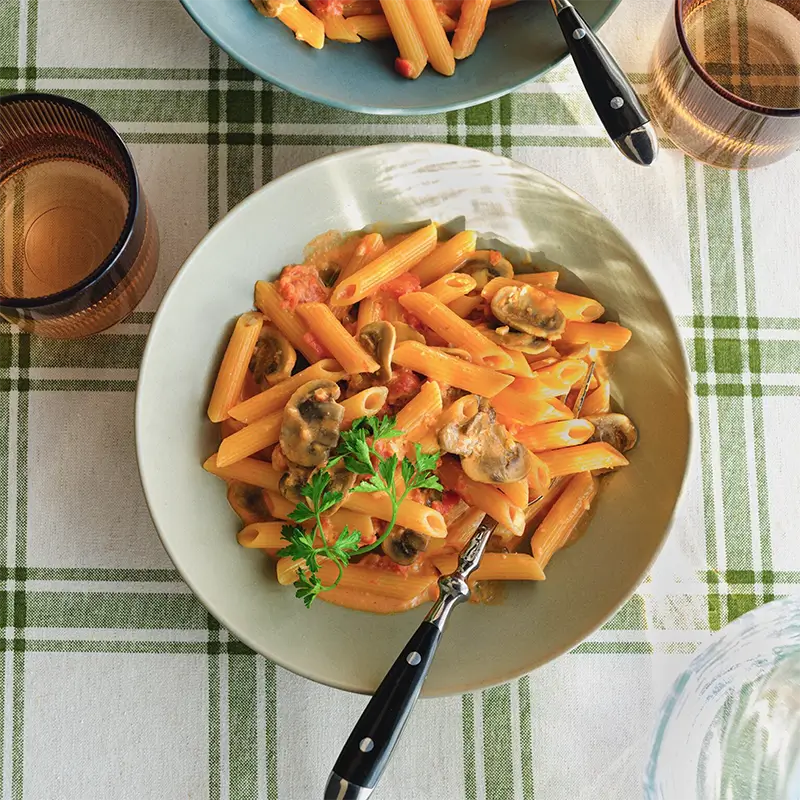
Broccoli and Miso Penne

No ratings yet
A Miso Infused One-Pan Pasta Dish
Easily prepared using just one pan, this pasta dish becomes naturally creamy with the blend of miso and broccoli.
Broccoli_Miso_Penne
Cook Time 15 minutes
Servings 1

Ingredients

  • 1/2 tbsp ENJUKU KOJI MISO
  • 1/2 broccoli Broccoli(5.29oz/150g)
  • 2.82 oz/80g Penne
  • 14 oz/400g Water
  • 1 clove Sliced garlic
  • pinch Red Pepper Flakes
  • 2 tbsps Olive oil
  • 1/2 tbsp Grated Parmesean Cheese
  • To taste Black pepper

Instructions

  • Divide the broccoli into small florets.
  • Warm olive oil in a pan over low heat and add one sliced garlic clove and a pinch of red pepper flakes. Once the aroma is released, add broccoli, uncooked penne pasta, 1 tablespoon of miso, and 14 oz of water. Increase the heat to medium. Once the mixture begins to boil, cover and reduce the heat to a gentle simmer. Cook the penne for 2 minutes less than the time stated on the package. (If the penne begins to burn during cooking or the water reduces and seems to scorch, add a little more water.)
  • Use a spatula to gently mash the broccoli, then cook over high heat until it becomes tender and blends well with the penne. Turn off the heat and add an additional 1/2 tablespoon of miso to the mixture.
  • Arrange the dish on a plate, drizzle with olive oil, and finish with a sprinkle of cheese powder and black pepper.

Product used in this recipe

2000_円熟こうじみそ_750g_01

Enjuku Koji Miso
26.4 oz (750 g)

Our Enjuku Kouji Miso has been our best-selling miso in Japan for over 30 years. The Miso has a bright beige in color, and has a perfect balance of umami and sweetness. Powerful flavor with a long and complex finish gives very versatile cooking use for many miso soup recipes.

Other recipes that you might like

Stir-fry Noodles in a Sweet and Savoury Miso Sauce

4.34 from 3 votes
This Easy Chicken Miso Stir-Fry makes a Flavourful and Satisfying Meal that's Perfect for a Quick Weeknight Dinner.
Perfect for the whole family, this yakisoba comes together quickly by simply stir-frying the ingredients and tossing them in a miso-sauce. The sweet and savoury miso sauce coats the noodles and vegetables creating a delicious and satisfying dish.
Trimmed_03_Teriyaki Noodles_01_M

Prep Time 20 minutes
Servings 1

Ingredients

  • 7 g Garlic, minced
  • 45 g Broccoli florets
  • 30 g Yellow bell pepper, thinly sliced
  • 30 g Shelled edamame beans (green soybeans)
  • 100 g Chicken breast, thinly sliced
  • 1 serving Stir fry noodles (approximately 150g)
  • 1 tbsp Sesame oil
  • 2 tbsps SWEET & SAVOURY MISO GLAZE & MARINADE SAUCE
  • 2 tsps Soy sauce

Instructions

  • Add 1 tbsp sesame oil to frying pan and heat over medium to high heat. When the oil is hot, add the minced garlic and sliced chicken. Stir-fry until the chicken is cooked through and no longer pink in color.
  • Add the broccoli florets, sliced yellow bell pepper and edamame to the pan. Continue to sauté until the vegetables are softened to your liking.
  • Add the cooked noodles and SWEET & SAVOURY MISO GLAZE & MARINADE SAUCE to the pan. Stir-fry everything together until well mixed and heated through.
  • Finish by sprinkling soy sauce over the stir-fried noodles and vegetables. Toss to combine all the ingredients.
  • Arrange on a plate and serve.

Product used in this recipe

sweet&savourymiso_800_3

Sweet and Savoury Miso Glaze and Marinade Sauce
370 g

Our Sweet and Savoury Miso is made from two types of miso, blended with sweet seasoning and rice vinegar to create a liquid miso, conveniently packaged in an easy-to-use bottle. This Sweet and Savoury Miso variety has a sweet yet umami-rich taste with moderate acidity, making it suitable for a wide variety of recipes such as stir-frying, marinating, and mixing into dressings, or enjoying on its own as a condiment.

Other recipes that you might like

Traditional Miso Ramen

3.84 from 12 votes
Experience the Timeless Comfort of Authentic Miso Ramen
Indulge in the classic flavours of Traditional Miso Ramen, a beloved Japanese noodle soup that you can make at home. The mild miso-based soup, accentuated with tahini, broad bean paste, and ginger, offers a subtle spicy kick. And for a luxurious touch, butter is added as a topping, creating a rich, creamy soup. This comforting bowl captures the authentic essence of Japanese ramen and is perfect for a satisfying meal.
Trimmed_03_Miso Ramen_02_M

Cook Time 25 minutes
Servings 1

Ingredients

  • 10 g Butter
  • 15 g Chopped spring onion (green onion)
  • 0.5 Boiled egg
  • 30 g Sweetcorn
  • 50 g Sliced Roasted chicken
  • Pepper to taste
  • 1 serving Ramen noodles (approximately 150g)

SOUP

  • 3 1/2 tsps DASHI FLAVOURED MISO SOUP BASE & SEASONING
  • 2 tbsps Mirin (sweet cooking rice wine)
  • 1 tbsp Tahini (sesame paste)
  • 1 tbsp Soy sauce
  • 1 clove Garlic, minced (about 7g)
  • 1 cm Piece of ginger (about 3g)
  • 1/2 Chicken stock cube
  • 1 tsp Sesame oil
  • 350 ml Hot water

Instructions

  • Prepare the toppings ahead of time by chopping the green onions and cooking the eggs until boiled, then cutting them in half.
  • In a bowl, make the soup base seasonings by mixing together DASHI FLAVOURED MISO SOUP BASE & SEASONING, mirin, tahini (sesame paste), soy sauce, minced garlic, minced ginger, chicken stock cube, and sesame oil. Stir well to combine all the seasonings.
  • Cook the Ramen noodles according to the package instructions. Drain and set aside.
  • In a separate pot, add the hot water and the mixed soup base seasonings . Stir well to dissolve and create the miso soup base.
  • Add the cooked noodles to the pot with the miso soup base. Mix well to combine.
  • Divide the noodles and miso soup into serving bowls.
  • Top the bowls with chopped green onions, halves of boiled eggs, and any additional toppings such as sweetcorn and chicken.
  • Season with pepper to taste and serve.

Product used in this recipe

flavouredmiso_800

Dashi Flavoured Miso Soup Base and Seasoning
340 g

Our Dashi Flavoured Miso is made from aged red miso, blended with bonito and kelp dashi stock to create a liquid miso with a classic, umami-rich taste, conveniently packaged in an easy-to-use bottle. Enjoy miso soup in just one minute. Additionally, use the Dashi Flavoured Miso as a base to create your own sauces and ramen soup. 

Other recipes that you might like

Creamy Vegetarian Miso Ramen

5 from 1 vote
A Creamy Vegetarian Miso Ramen that You can Make at Home!
Experience restaurant-quality creamy vegetarian miso ramen made right in your own kitchen! This comforting bowl of savoury broth, noodles and vegetables is quick, easy and utterly satisfying.
Trimmed_04_Creamy Miso Ramen_07_M

Cook Time 25 minutes
Servings 1

Ingredients

  • 2 leaves Baby bok choy (about 40g)
  • 4 Shiitake mushrooms (about 40g)
  • 1/4 block Firm tofu (about 80g)
  • 1 1/2 tbsps Shelled edamame (green soybeans)
  • 0.5 Eggs (omit for vegan option)
  • 1/2 tbsp Sesame oil
  • 1 serving Ramen noodles (approximately 150g)

SOUP

  • 200 ml Unsweetened soy milk
  • 1 tbsp plus 1 tsp ORGANIC DASHI FLAVOURED MISO SOUP BASE & SEASONING (about 20g)
  • 180 ml Water
  • 1 tsp Grated garlic
  • Vegetable Stock (appropriate amount for 400 ml of water)

Instructions

  • Boil the baby pak choi leaves in a pot of water until tender, about 3-4 minutes. Remove and set aside. In the same pot of boiling water, cook the eggs for 6-7 minutes for a soft-boiled. Cool under running water, peel and cut in half.
  • Prepare the tofu by draining and pressing to remove excess moisture, Cut the tofu into cubes. Heat the sesame oil in a frying pan over medium heat. Add tofu cubes and shitake mushrooms. Cook until tofu is golden and mushrooms are tender. Set aside.
  • n a bowl, combine the ORGANIC DASHI FLAVOURED MISO SOUP BASE & SEASONING, grated garlic and vegetable stock. Mix well to dissolve the miso paste.
  • Combine 180ml water and soy milk in a pot and heat until almost boiling. Add the miso, garlic, vegetable stock mixture to the pot and mix thoroughly.
  • In a separate pot, cook the ramen noodles according to package directions. Once cooked, drain and set aside.
  • Put cooked noodles in a bowl and pour the hot soup over the noodles.
  • Arrange the baby pak choi, shitake mushrooms, tofu, edamame and half boiled egg (if using) on top of the bowl.
  • Serve hot and enjoy!

Product used in this recipe

organic_flavouredmiso_800

Organic Dashi Flavoured Miso Soup Base and Seasoning
340 g

Our Organic Dashi Flavoured Miso is made from organic rice and soybeans. We blend shiitake mushroom and kelp dashi stock together to create a liquid miso with a mild, umami-rich flavour, conveniently packaged in an easy-to-use bottle. Enjoy miso soup in just one minute. Additionally, use the Organic Dashi Flavoured Miso as a base to create your own sauces, ramen soup and dressings.

Other recipes that you might like

Vegan Miso-Glazed Tofu Noodle Stir Fry

5 from 1 vote
A Veggie-packed Weeknight Stir Fry Bursting with Flavour
This dish is perfect for a delicious weeknight dinner that is both wholesome and full of flavour. Crispy tofu, vibrant veggies are stir-fried together in a savoury miso-infused sauce. This nutritious meal comes together quickly and easily, making it perfect for satisfying your hunger on a busy night.
Trimmed_02_Tofu Miso Yakisoba_03_M

Cook Time 25 minutes
Servings 1

Ingredients

  • 1 clove Garlic, minced (about 7g)
  • 0.5 cm Piece of ginger, minced (about 2g)
  • 1/3 Green onion, thinly sliced diagonally (about 30g)
  • 2 Medium-sized mushrooms, sliced (about 20g)
  • 30 g Fresh spinach, chopped
  • 1/4 Yellow bell pepper, cut into matchsticks (about 35g)
  • 6 Snap peas
  • 20 g Red onion, chopped
  • 1/4 Block of firm tofu, cubed (about 80g)
  • 1 serving Stir fry noodles (approximately 150g)
  • 1/2 tbsp Sesame oil
  • 1 tbsp ORGANIC DASHI FLAVOURED MISO SOUP BASE & SEASONING
  • 3 g Powdered Vegetable broth
  • Salt and pepper, to taste

Instructions

  • Prepare the tofu by draining and pressing it to remove excess water. Cut the tofu into cubes.
  • Heat sesame oil in a large pan over medium heat.
  • Add the tofu cubes to the pan and cook, turning occasionally, until golden brown and crispy on all sides. Remove tofu from the pan and set aside.
  • In the same pan, add minced garlic, sliced green onions, mushrooms, spinach, bell pepper, peas and red onion. Sauté until all of the vegetables are wilted and tender.
  • Meanwhile, cook the noodles according to package instructions. Drain and set aside.
  • Return the tofu to the pan with the cooked vegetables.
  • Gently fold in the cooked noodles, tossing everything together until well combined.
  • Add grated ginger, powdered vegetable broth, and ORGANIC DASHI FLAVOURED MISO SOUP BASE & SEASONING to the pan. Stir well to combine and coat the tofu and vegetables with the miso sauce.
  • Season with salt and pepper to taste and serve.

Product used in this recipe

organic_flavouredmiso_800

Organic Dashi Flavoured Miso Soup Base and Seasoning
340 g

Our Organic Dashi Flavoured Miso is made from organic rice and soybeans. We blend shiitake mushroom and kelp dashi stock together to create a liquid miso with a mild, umami-rich flavour, conveniently packaged in an easy-to-use bottle. Enjoy miso soup in just one minute. Additionally, use the Organic Dashi Flavoured Miso as a base to create your own sauces, ramen soup and dressings.

Other recipes that you might like

Creamy Miso Pasta

4 from 2 votes
Transform your dinner routine with this creamy miso pasta, where the rich umami of white miso meets the irresistible comfort of a quick pasta dish that's ready in under 20 minutes.
This recipe is created by Marc Matsumoto (No Recipes®)
creamy-miso-pasta

Creamy Miso Pasta

By incorporating the umami-packed essence of white miso into a luscious sauce that’s complemented by the earthy depth of sautéed mushrooms, this quick weeknight dinner is the perfect pasta dish for those times when you need to get a delicious yet satisfying meal on the table in less than 20 minutes.

Why This Recipe Works

  • Sweating the mushrooms first allows you to thoroughly brown them without burning the garlic.
  • After being parboiled, the spaghetti is finished in the sauce, like risotto. This allows the noodles to absorb the flavors of the sauce without going soggy. It also releases starch from the spaghetti into the sauce, stabilizing the miso butter and forming a creamy emulsion.
  • The emulsified miso butter coats each strand of spaghetti in a luxuriously creamy sauce that almost tastes like it was made with Parmesan cheese and heavy cream.

Key Ingredients

  • Pasta – With long, slender strands ideal for clinging to our creamy miso sauce, spaghetti provides a delightful base perfect for twirling around your fork. Other types of pasta, such as linguine, fettuccine, or penne, will also work great.
  • Extra Virgin Olive Oil – Although the sauce contains butter, it is not a good idea to use it to brown the mushrooms as the milk solids will burn, and the excess fat will make your miso sauce greasy. 
  • Garlic – Lots of garlic adds a pungent bite that contrasts the creaminess of the dish. If you don’t have any fresh garlic cloves, a half teaspoon garlic powder can be used in a pinch.  
  • Mushrooms – Mushrooms add a meaty texture and umami flavors to silky sauce. White button mushrooms work well for this miso pasta recipe, but any flavorful fungi like cremini, Portobello, shiitake, or maitake mushrooms will work just as well.
  • White Miso – The star of our pasta sauce is white miso paste. Aside from seasoning the sauce, it also contributes an umami element while lending a rich cheesy flavor. 
  • Unsalted Butter – The other half of our miso butter sauce is butter. When emulsified with the starchy pasta water and miso, it creates a smooth sauce that envelopes each strand of spaghetti in creamy butter. Because the miso contains a lot of salt, it’s important to use unsalted butter. Using cultured butter will take this creamy miso pasta recipe to the next level thanks to it’s cheesy aroma. To make this recipe plant-based you can substitute vegan butter.
  • Snap Peas – Crisp snap peas contribute a fresh, sweet contrast to the creamy pasta, adding color and texture. Snow peas, green peas, asparagus, green onions, or broccoli are all excellent alternatives here.  
  • Garnish – Garnish the finished pasta with some chopped Italian parsley or chives for a pop of color, or if you want to kick up the heat, try sprinkling on some freshly cracked black pepper or red pepper flakes.

How to make Miso Pasta

The first step is to mash together room-temperature unsalted butter with the white miso until you have a smooth paste. This mixture will keep for weeks and can be used to season a wide variety of dishes, so you can make a large batch of miso butter and store it in a sealed container in the refrigerator.

Next, boil the spaghetti in a large pot of water seasoned with a generous amount of salt for two minutes less than what the package instructions say. You want to undercook the pasta so it doesn’t get soggy as it cooks together with the creamy miso sauce.

While the noodles cook, heat the olive oil in a large frying pan and add the mushrooms, sautéing them over medium heat. This initial sweating of the mushrooms draws out moisture, concentrating their flavor. Now add the minced garlic to the sautéed mushrooms and continue cooking them until they start to brown around the edges.

When the timer goes off, transfer the cooked pasta directly to the pan with the mushrooms and add a cup of pasta water along with snap peas. Finish cooking the spaghetti as if you are making risotto, stirring it continuously while adding additional cups of pasta water as the liquid evaporates. As the noodles release starch you’ll notice the starch from the noodles creates a creamier sauce that will help stabilize the miso butter that’s about to join the pan.

When the spaghetti is cooked to your liking, add the miso butter to the pan, vigorously mixing it into the noodles to create an emulsion with the remaining liquid. As the miso butter melts, the fat in the butter forms microscopic droplets that disperse evenly through the starchy sauce forming a stable emulsion. This not only prevents the sauce from separating but also ensures that each strand of pasta gets coated in the rich, velvety sauce. If at any point things start to dry out, simply add a little more pasta water to maintain the creamy consistency.

Garnish the pasta with chopped parsley, pepper flakes, or green onions to taste and serve immediately.

Prep Time 5 minutes
Cook Time 12 minutes
Servings 2 peaple

Ingredients

  • 225 grams spaghetti
  • Salt for pasta water
  • 1 tablespoon olive oil
  • 10 grams garlic minced
  • 170 grams mushrooms sliced
  • 2 tablespoons ORGANIC MISO WHITE
  • 2 tablespoons unsalted butter brought to room temperature
  • 75 grams snap peas
  • Italian parsley chopped for garnish

Instructions

  • Make the miso butter by mashing the butter and miso together until you have a smooth, uniform paste.
    Creamy Miso Pasta
  • Bring a large pot of well-salted water to a boil, and cook the spaghetti for 2 minutes less than the package directions state.
    Creamy Miso Pasta
  • Add the olive oil and mushrooms to a large frying pan over medium heat and saute until the mushrooms are cooked through and there is no liquid in the pan.
    Creamy Miso Pasta
  • Add the garlic and saute until the mushrooms have browned around the edges.
    Creamy Miso Pasta
  • When the pasta is done, use tongs to transfer it directly to the pan with the mushrooms. Add a ladleful of boiling liquid along with the snap peas. Continue cooking the pasta like risotto, stirring constantly and adding more liquid as it evaporates for another minute.
    Creamy Miso Pasta
  • Finish the miso pasta by adding the miso butter and vigorously mixing to create an emulsion with any remaining liquid in the pan. If the pasta starts getting dry, just add more pasta liquid.
    Creamy Miso Pasta
  • Serve garnished with chopped Italian parsley.
    Creamy Miso Pasta


Product used in this recipe

organic-white-miso

Organic Miso
White Miso
17.6 oz (500 g)

Our Organic Miso “White Miso” is the traditional Shinshu-style miso made from organic rice and soybeans, with bright beige in color, and an excellent balance of refreshing aroma and umami. It is the most versatile among Hikari Miso Organic Miso series to match with any cooking.

Recipe Creator

Marc Matsumoto

Recipe Creator

Marc Matsumoto

Marc Matsumoto is a Tokyo-based culinary creator and cookbook author who’s passionate about the benefits and versatility of Japanese ingredients. Through his website Norecipes.com, he shares delicious ways to use Japanese ingredients such as miso to elevate everyday meals.

Other recipes that you might like

Easy Miso Noodles

5 from 1 vote
Welcome to a delightful twist on traditional flavors with our Easy Miso Noodles recipe. With garlicky chicken and thick udon noodles glazed in a nutty miso sauce, this quick weeknight stir-fry is sure to be a family favorite.
This recipe is created by Marc Matsumoto (No Recipes®)
miso-noodles-009

Easy Miso Noodles

Udon is a classic Japanese noodle, and although it’s most commonly served in a comforting broth, noodle soups aren’t all they’re good for Udon’s firm, chewy texture takes center stage in this vibrant stir-fry, enriched with the mellow yet complex flavor of white miso paste. When paired with succulent chicken and an array of fresh vegetables, this recipe offers a balanced, one-pan meal that’s as nutritious as it is flavorful.

Why This Recipe Works

  • The mellow yet umami-rich taste of white miso creates a flavorful stir-fry sauce. To save time, you can mix the miso sauce ingredients in advance.
  • Toasted sesame oil adds a nutty flavor while also preventing the udon from sticking together.
  • A combination of colorful vegetables, chicken, and udon makes for an easy and balanced one-pan meal.

Ingredients for Miso Noodles

  • Udon Noodles  – Thick, chewy, and satisfying, these wheat noodles are ideal for this recipe because they will absorb the beautiful flavors of the sauce without becoming soggy. Defrosted frozen udon works best, but you can also boil dry noodles according to the package directions. Cooked ramen noodles, soba noodles, or rice noodles are all alternatives that would work for this recipe.
  • White Miso -This fermented soybean paste is the star of our miso noodles recipe. It’s milder and slightly sweeter than red miso, making it perfect for a light yet umami-packed dish.
  • Sugar – A touch of sugar balances the saltiness of the miso. Brown sugar, honey, or maple syrup can be used as alternatives.
  • Toasted Sesame Oil – Adds a rich, nutty flavor to the sauce mixture and helps prevent the udon from sticking. If unavailable, you can experiment with other flavorful oils, such as olive oil or pumpkin seed oil.
  • Chicken – This noodle recipe was made with boneless skinless chicken thighs for their juiciness and flavor; breast meat will also work. Alternatively, you can use any fast-cooking protein such as shrimp, beef, or pork. For a vegetarian version, firm tofu or mushrooms are great substitutes.
  • Garlic – A generous amount of minced garlic infuses the chicken with flavor.
  • Soy Sauce – Marinating the chicken with Japanese dark soy sauce adds umami flavor while ensuring the protein is seasoned all the way through. Light soy sauce, low sodium soy sauce, or oyster sauce both make suitable substitutes. Tamari or coconut aminos are gluten-free alternatives.
  • Vegetables – A combination of carrots, cabbage, and green onion (spring onions) add color, flavor, and sweetness to this easy noodle dish. Bell peppers, snap peas, yellow onion, and bok choy are other great alternatives.

How to Make Miso Noodles

To make the miso sauce, whisk together the white miso paste, water, sugar, and toasted sesame oil until the sauce ingredients are smooth.

Next, marinate the chicken pieces in minced garlic and soy sauce. You’ll want to do this regardless of your choice of protein. For an extra boost of umami, try marinating the chicken in oyster sauce.

Heat a tablespoon of vegetable oil in a large frying pan over medium-high heat. Spread the marinated chicken and carrots out in a single layer so they’re making direct contact with the pan. Once the chicken begins to brown on one side, stir-fry the mixture until the meat is nearly cooked through. Add the cooked udon and cabbage and continue stir-frying until they start to caramelize at the edges. Drizzle the miso sauce over the udon and veggies and toss the mixture to coat the noodles in the sauce. Finish this easy stir-fry recipe with the green onions and toss them in.

Spicy Miso Noodles

For a fiery variation on this simple recipe, try adding chopped fresh chili peppers, hot sauce, chili crisp, or doubanjiang (chili bean paste) to the miso sauce.

Prep Time 10 minutes
Cook Time 10 minutes
Servings 2

Ingredients

  • 3 tablespoons ORGANIC MISO WHITE
  • 3 tablespoons water
  • 2 teaspoons sugar
  • 1 teaspoon toasted sesame oil
  • 1 boneless skinless chicken thigh (150 grams, cut into bite-sized pieces)
  • 2 large cloves garlic (14 grams, minced)
  • 2 teaspoons soy sauce
  • 1 tablespoon vegetable oil
  • 1/3 carrot (50 grams, cut into matchsticks)
  • 2 servings cooked udon noodles (420 grams)
  • 2 leaves cabbage (75 grams, chopped)
  • 3 green onions (50 grams, cut diagonally)

Instructions

  • Add 3 tablespoons ORGANIC MISO WHITE, 3 tablespoons water, 2 teaspoons sugar, and1 teaspoon toasted sesame oil to a bowl and stir until the miso sauce is smooth and free of lumps.
    miso-noodles-001
  • Marinate 1 boneless skinless chicken thigh with 2 large cloves garlic and 2 teaspoons soy sauce.
    miso-noodles-002
  • Add 1 tablespoon vegetable oil, the marinated chicken,and 1/3 carrot to a large skillet preheated over medium-high heat. Spread theingredients into a single layer and let them cook undisturbed until they startto brown.
    miso-noodles-003
  • Stir-fry the mixture until thechicken is mostly cooked through.
    miso-noodles-004
  • Add 2 servings cooked udonnoodles and 2 leaves cabbage, and stir-fry until the cabbage is vibrant greenand the udon begins to brown around the edges.
    miso-noodles-005
  • Add the miso sauce and toss to coat evenly. When mostof the liquid has evaporated, add 3 green onions and toss to incorporate.
    miso-noodles-006

Product used in this recipe

organic-white-miso

Organic Miso
White Miso
17.6 oz (500 g)

Our Organic Miso “White Miso” is the traditional Shinshu-style miso made from organic rice and soybeans, with bright beige in color, and an excellent balance of refreshing aroma and umami. It is the most versatile among Hikari Miso Organic Miso series to match with any cooking.

Recipe Creator

Marc Matsumoto

Recipe Creator

Marc Matsumoto

Marc Matsumoto is a Tokyo-based culinary creator and cookbook author who’s passionate about the benefits and versatility of Japanese ingredients. Through his website Norecipes.com, he shares delicious ways to use Japanese ingredients such as miso to elevate everyday meals.

Other recipes that you might like

Miso Butter Pasta with Tuna and Cabbage

5 from 2 votes
With al-dente spaghetti tossed in delicious Japanese-style seasoning, this Miso Butter Pasta with Tuna and Cabbage makes a quick meal you’ll love. It takes only simple pantry ingredients and is ready in 15 minutes!
This recipe is created by Nami( Just One Cookbook®)
Miso-Butter-Pasta-with-Tuna-and-Cabbage-for-hp

Prep Time 5 minutes
Cook Time 9 minutes
Servings 2

Ingredients

  • 1 tbsp Salt (for cooking pasta)
  • 7 oz Spaghetti
  • 2 Cloves garlic
  • 3 leaves (5 oz) Cabbage
  • 3 oz (1 can) Tuna
  • 1 tbsp Extravirgin olive oil
  • Freshly ground black pepper
  • 1 Unsalted butter
  • 1 tbsp ORGANIC MISO RED
  • 1/4 cup Reserved pasta water
  • 2 tsp Soy sauce
  • 2 tsp Mirn

Instructions

To Cook Spaghetti

  • Start boiling 4 quarts of water in a large pot. Once boiling, add salt and spaghetti. Stir to make sure spaghetti doesn’t stick to each other.
  • Cook according to the package instruction but reduce the cooking time by 1 minute as we the pasta will be cooked in the pan afterward.
  • Drain if you finish cooking the spaghetti first, but you should be able to cook the rest of the ingredients in 10 minutes while spaghetti is being cooked.

To Prepare Ingredients

  • While cooking pasta, we prepare ingredients. Peel the garlic cloves and thinly slice them.
  • Remove the tough core of the cabbage and cut into 1 inch square pieces.
  • Drain the canned tuna. If you use a big chunk, you can cut/break into smaller pieces (optional).

To Cook Miso Butter Pasta with Tuna and Cabbage

  • Heat the olive oil in a large frying panover medium heat. While the oil is still not hot yet, add the garlic to start infusing. Make sure to coat the garlic with oil.
  • When the garlic is sizzling and well-coated with oil, add the cabbage and coat with the oil.
  • Add the canned tuna and toss together with the cabbage. Then add freshly ground black pepper, unsalted butter, and miso.
  • Reserve ¼ cup of pasta water and add to the pan. Shake the pan and mix all the ingredients together. Make sure the miso is dissolved while mixing.
  • Add the soy sauce and mirin.
  • When the spaghetti is done cooking, pick up the spaghetti with a pair of tongs (or you can quickly drain in the sink) and add to the pan. Toss the spaghetti to mix all together.
  • Season the spaghetti with freshly ground pepper. Taste and add salt if needed. The reserved pasta water I added has enough salt so I do not add additional salt here. Serve the pasta to individual dishes. Enjoy!

Product used in this recipe

organic-red-miso

Organic Miso
Red Miso
17.6 oz (500 g)

Our Organic Miso “Red Miso” is made from organic rice and soybeans, with bright red in color. The Long fermentation process creates a distinct, deep, and rich taste, with a strong miso aroma.

Contains: Soybeans

Recipe Creator

Namiko Hirasawa Chen

Recipe Creator

Namiko Hirasawa Chen

Namiko Hirasawa Chen is the creator of Just One Cookbook, the #1 English-language website for Japanese recipes. Nami believes that anyone can cook traditional and modern Japanese dishes with confidence using her accessible, step-by-step instructions and videos. To help home cooks prepare and beautifully plate their homemade meals, she recently launched her online shop called JOC Goods dedicated to artisan Japanese tableware and kitchenware. Nami was born and raised in Yokohama, Japan and now resides with her family in California.

Other recipes that you might like

Mushroom Miso Cream Pasta

No ratings yet
Mild miso󠄀 and cream are a perfect match!
mushroom-miso-cream-pasta

Cook Time 30 minutes
Servings 2

Ingredients

  • 0.7 oz (20g) King oyster mushrooms
  • 0.7 oz (20g) Mushrooms
  • 7 oz (200g) Pasta
  • 2 tbsp ORGANIC MISO RED
  • 5 fl oz (150 cc) Whipping cream
  • A pinch of Salt
  • A pinch of Black pepper
  • Some Olive oil
  • Some Japanese green onion or chives

Instructions

  • Bring water to a boil. Add 1 tsp of salt and cook pasta.
  • Heat a pan, add olive oil and fry both of sliced mushrooms. When they soften, season with salt and pepper.
  • Add whipping cream in the pan (from instruction 2). When it is boiled, lower the heat and add miso. Remove the pan from heat when miso is dissolved.
  • Add cooked pasta to the pan (from instruction 3) and mix with the cream sauce. Serve with chopped Japanese green onion or chives.

Product used in this recipe

organic-red-miso

Organic Miso
Red Miso
17.6 oz (500 g)

Our Organic Miso “Red Miso” is made from organic rice and soybeans, with bright red in color. The Long fermentation process creates a distinct, deep, and rich taste, with a strong miso aroma.

Contains: Soybeans

Other recipes that you might like

Miso Tonkotsu Creamy Ramen

5 from 1 vote
Craving the soul-warming richness of Sapporo-style miso ramen? This easyrecipe uses clever techniques to build deep umami and a creamy, tonkotsu misoramen broth—in under 30 minutes.
This recipe is created by Marc Matsumoto (No Recipes®)
traditional-miso-ramen

With its earthy miso aroma, rich miso tonkotsu broth, and springy yellow noodles, this creamy ramen recipe delivers the kind of soul-warming comfort perfected in the ramen shops of Sapporo, Japan.
Contrary to what some recipes claim, the creamy texture of tonkotsu broth doesn’t come from milk, heavy cream, or coconut milk. Traditional versions of this Japanese noodle soup boil pork bones for hours, dissolving their collagen into the broth. The collagen emulsifies the fat and stock, creating its rich, unctuous mouthfeel.
This easy miso ramen recipe uses a few clever shortcuts to achieve the same richness and umami-packed flavor in a fraction of the time. The result? A restaurant-quality bowl of authentic Japanese ramen in under 30 minutes.

Why This Recipe Works:

  • Using ground pork and grated aromatics quickly infuses the creamy broth with a deep, savory flavor.
  • Browning the pork with a bit of miso builds the complex, roasted notes in Sapporo style ramen.
  • Powdered gelatin boosts the soup’s collagen content, giving it a creamy mouthfeel like tonkotsu miso ramen broth.
  • Adding fresh white miso at the end lets you emulsify the soup with a stick blender to create a rich, creamy ramen broth.

Ingredients

  • Ground pork – Adds savory depth and richness to the broth. Because it has more surface area than whole cuts, ground pork browns quickly, developing flavorful caramelized bits that mimic the taste of long-simmered pork bone broth. If you don’t eat pork, ground chicken is a good alternative—just be sure it has enough fat to carry the flavor.
  • Onion – Adds natural sweetness and aromatic depth, balancing the miso and pork. Grating the onion helps it caramelize faster and melt into the broth for a smooth texture.
  • Ginger – Fresh ginger brightens the soup and cuts through the richness, lending a clean, peppery zing that’s essential flavor component of Japanese miso ramen.
  • Garlic – Offers a bold, pungent punch that wakes up the broth and enhances its savory complexity. It’s a small ingredient that makes a big impact.
  • White miso – Mellow and mildly sweet, this fermented soybean paste is the primary seasoning for the miso broth, providing the salt while giving your bowl of ramen a rich flavor with loads of umami. You can experiment with darker varieties of miso paste, such as red miso, for a bolder flavor.
  • Baking soda – A pinch of baking soda raises the pH, which speeds up the Maillard reaction and helps brown the pork and aromatics more quickly. You can skip it but expect to spend more time stir-frying.
  • Chicken broth – A light, low-sodium chicken stock forms the base of the soup, offering a head start over using water. Vegetable or dashi stock are other great options.
  • Powdered gelatin – Tonkotsu ramen broth gets its silky texture from dissolved collagen from bones that are simmered for hours. Gelatin replicates that unctuous tonkotsu-style richness in an instant, no bones required.
  • Fresh ramen noodles – The chewy texture of fresh noodles is essential for a truly satisfying bowl of creamy miso ramen. Curly yellow alkaline noodles are the noodles of choice for authentic Sapporo style ramen. In a pinch, other dried or fresh Asian noodles will work.
  • Toppings – Ramen is a bit like pizza in that you can top your bowl of noodles with whatever combination of vegetables, proteins, and condiments you like. Some ideas include scallions, sweet corn, grated ginger, shiitake mushrooms, tofu, chicken, hot chili paste, hot sauce, etc. While dairy ingredients like milk and heavy cream aren’t used in the broth, Miso ramen is sometimes topped with butter.

How to Make Creamy Ramen

To make the Tonkotsu miso ramen broth, you’ll start by building layers of flavor. Add the ground pork, grated onion, ginger, garlic, some white miso, a splash of oil, and a pinch of baking soda to a large skillet or saucepan. The baking soda raises the pH, which encourages the Maillard reaction—this is the same process that gives seared meats their irresistible, savory flavor. Stir everything together and place the pan over medium-high heat. As the pork cooks, use the edge of your spatula to break up any chunks, mixing frequently to prevent burning.

Continue stir-frying until the mixture darkens and a sticky, brown fond forms on the bottom of the pan—this will take about 8 to 10 minutes. That layer of caramelized bits is pure flavor and it’s what quickly creates the depth of flavor of tonkotsu pork bone broth. Be patient here; if the pan starts to scorch, reduce the heat and keep stirring.

Next, pour in the chicken stock and sprinkle in the powdered gelatin. Turn the heat to high and use a wooden spoon or spatula to scrape up the fond as the soup comes to a boil. The gelatin is a shortcut to the silky, collagen-rich texture found in tonkotsu miso ramen, giving the flavorful broth a satisfying body without simmering the bones for hours. Once it reaches a rolling boil, reduce the heat and let it simmer for about 6 minutes to infuse the broth with all that porky, umami-packed goodness.

Now, strain the mixture through a fine-mesh sieve into a clean pot or bowl, pressing on the solids to extract every drop of flavor. While the cooked meat won’t be served in this bowl of ramen, it can be saved for another dish—try using it in fried rice or stir-fried noodles.

Add the remaining white miso paste to the strained broth, then use an immersion blender to emulsify the soup. This technique incorporates the fat into the soup, creating the rich, creamy texture of tonkotsu ramen in minutes. Keep the broth warm over low heat, but don’t let it boil.

Meanwhile, boil your ramen noodles in a pot of water according to the package instructions. Drain them well and divide them between two bowls. Ladle the creamy miso ramen soup over the noodles, then use chopsticks or tongs to form a neat nest of noodles in each bowl. This helps distribute the broth and keeps the noodles from clumping while giving you a pedestal on which to add your favorite ramen toppings.

Top the noodles with your choice of toppings, such as sweet corn, green onions, mushrooms, toasted sesame seeds, a soft-boiled egg, or a few slices of chashu. If you want to turn this into a spicy miso ramen, make a batch of Spicy Miso for a topping or drizzle on some hot chili oil or your favorite Asian chili sauce.

With a little planning, you can have this tonkotsu miso ramen recipe on the table in under 30 minutes.


Prep Time 5 minutes
Cook Time 20 minutes
Servings 2 bowls

Ingredients

  • 1 tablespoon vegetableoil
  • 250 grams groundpork
  • 60 grams onion(1/4 large onion, grated)
  • 25 grams ginger( 1-inch piece, grated)
  • 20 grams garlic(3large cloves, grated)
  • 2 tablespoons ORGANICMISO WHITE MISO (36 grams)
  • ¼ tablespoon baking soda
  • 4 cups low sodium chicken broth⅓
  • 10 grams powdered gelatin
  • 3 tablespoons ORGANICMISO WHITE MISO (54 grams)
  • 260 grams fresh ramen noodles

Nutrition Facts

Calories・1114kcalCarbohydrates・108gProtein・55gFat・52gSaturated Fat・21gPolyunsaturated Fat・6gMonounsaturated Fat・22gCholesterol・90mgSodium・4872mgPotassium・1239mgFiber・7gSugar・7gVitamin A・438IUVitamin C・8mgCalcium・130mgIron・9mg

Instructions

  • Add 1 tablespoon vegetable oil, 250 gramsground pork, 60 grams onion, 25 grams ginger, 20 grams garlic, 2 tablespoonsORGANIC MISO WHITE MISO, and ¼ teaspoon baking soda to a frying pan.
    Traditional Miso Ramen Recipe
  • Put the pan over medium-high heat andstir-fry the ingredients while crumbling with the side of a spatula to break upany chunks of pork or miso. 
    Traditional Miso Ramen Recipe
  • Continue stir-frying the mixture untilthere is no liquid left and a thick layer of brown fond forms on the bottom ofthe pan (about 8-10 minutes).
    Traditional Miso Ramen Recipe
  • Add 4 cups low-sodium chicken broth and 10grams powdered gelatin to the pan. Turn the stove to high heat and bring theramen broth to a rolling boil while scraping up the fond from the bottom andsides of the pan. Turn down the heat to maintain a full simmer and cook for 6minutes. 
    Traditional Miso Ramen Recipe
  • Strain the mixture through a fine meshstrainer and press on the solids to extract as much broth from the meat aspossible. Save the meat to use in a different recipe. 
    Traditional Miso Ramen Recipe
  • Add 3 tablespoonsORGANIC MISO WHITE MISO and Use an immersion blender to emulsify the miso intothe creamy broth until it is creamy and uniform in color. 
    Traditional Miso Ramen Recipe
  • Transfer the creamyramen broth to a pot and keep it warm over low heat, but do not let itboil. 
    Traditional Miso Ramen Recipe
  • Bring a large pot ofwater to a boil and cook your ramen noodles according to the packagedirections. Drain the noodles well. 
    Traditional Miso Ramen Recipe
  • To serve the tonkotsumiso ramen, divide the ramen noodles between two bowls. 
  • Pour the hot broth overthe noodles and use chopsticks or tongs to pull them up and over themselves tocreate a flat platform of noodles. 
    Traditional Miso Ramen Recipe
  • Garnish the tonkotsu miso ramen with your favorite toppings such ascorn, chopped green onions, mushrooms, a soft-boiled egg, or sliced meat.
    Traditional Miso Ramen Recipe

Product used in this recipe

organic-white-miso

Organic Miso
White Miso
17.6 oz (500 g)

Our Organic Miso “White Miso” is the traditional Shinshu-style miso made from organic rice and soybeans, with bright beige in color, and an excellent balance of refreshing aroma and umami. It is the most versatile among Hikari Miso Organic Miso series to match with any cooking.

Recipe Creator

Marc Matsumoto

Recipe Creator

Recipe Creator Marc Matsumoto

Marc Matsumoto is a Tokyo-based culinary creator and cookbook author who’s passionate about the benefits and versatility of Japanese ingredients. Through his website Norecipes.com, he shares delicious ways to use Japanese ingredients such as miso to elevate everyday meals.

Other recipes that you might like