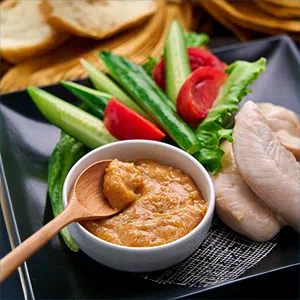
A Nourishing Blend of Avocado and Protein-Packed Tofu in a Vibrant Salad Topped with a Sweet and Savoury Miso VinaigretteThis vibrant salad showcases nutrient-rich avocado and protein-packed tofu, complemented by a sweet and tangy miso dressing for a flavourful and healthy dish.
Drain the tofu and press firmly to remove excess water. Cut the tofu into cubes.
Heat 1/2 tbsp of olive oil in a frying pan over medium heat. Add the tofu cubes to the pan and cook, turning occasionally, until golden brown and crispy on all sides.
Prepare the salad ingredients by cutting them into bite-size pieces. For the red onion, slice it as thinly as possible and soak in water for about 5 minutes to reduce its sharpness.
In a small bowl, mix together the SWEET & SAVOURY MISO GLAZE & MARINADE SAUCE, olive oil, balsamic vinegar and black pepper and stir well.
Place lettuce and sliced vegetables in a bowl and top with cubed tofu and avocado.
Pour the dressing over the vegetables and serve.
Product used in this recipe
Sweet and Savoury Miso Glaze and Marinade Sauce 370 g
Our Sweet and Savoury Miso is made from two types of miso, blended with sweet seasoning and rice vinegar to create a liquid miso, conveniently packaged in an easy-to-use bottle. This Sweet and Savoury Miso variety has a sweet yet umami-rich taste with moderate acidity, making it suitable for a wide variety of recipes such as stir-frying, marinating, and mixing into dressings, or enjoying on its own as a condiment.
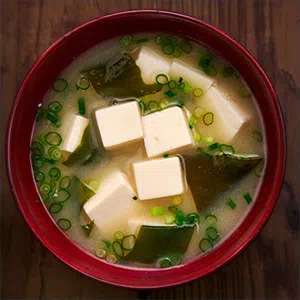
A Comforting Classic Japanese Soup for Any Occasion.Immerse yourself in the authentic flavours of traditional Japanese Miso Soup. This traditional version features protein-rich tofu and healthy wakame seaweed, perfectly complemented by a broth infused with kombu and bonito dashi, imparting an unmistakably authentic flavour. Enjoy this soup as a side dish or as a light meal.
Carefully add the tofu cubes to the water (avoid breaking the tofu cubes by sliding them gently into the pan directly from the cutting board.) Turn off the heat just before the tofu begins to float.
Add the DASHI FLAVORED MISO SOUP BASE & SEASONING to the saucepan.
Add the dried wakame seaweed to the mixture and stir well.
Serve in soup bowls and garnish with chopped leeks or green onions.
Product used in this recipe
Dashi Flavoured Miso Soup Base and Seasoning 340 g
Our Dashi Flavoured Miso is made from aged red miso, blended with bonito and kelp dashi stock to create a liquid miso with a classic, umami-rich taste, conveniently packaged in an easy-to-use bottle. Enjoy miso soup in just one minute. Additionally, use the Dashi Flavoured Miso as a base to create your own sauces and ramen soup.
A Veggie-packed Weeknight Stir Fry Bursting with FlavourThis dish is perfect for a delicious weeknight dinner that is both wholesome and full of flavour. Crispy tofu, vibrant veggies are stir-fried together in a savoury miso-infused sauce. This nutritious meal comes together quickly and easily, making it perfect for satisfying your hunger on a busy night.
1/3 Green onion, thinly sliced diagonally (about 30g)
2 Medium-sized mushrooms, sliced (about 20g)
30gFresh spinach, chopped
1/4Yellow bell pepper, cut into matchsticks (about 35g)
6Snap peas
20gRed onion, chopped
1/4Block of firm tofu, cubed (about 80g)
1 servingStir fry noodles (approximately 150g)
1/2tbspSesame oil
1tbspORGANIC DASHI FLAVOURED MISO SOUP BASE & SEASONING
3gPowdered Vegetable broth
Salt and pepper, to taste
Instructions
Prepare the tofu by draining and pressing it to remove excess water. Cut the tofu into cubes.
Heat sesame oil in a large pan over medium heat.
Add the tofu cubes to the pan and cook, turning occasionally, until golden brown and crispy on all sides. Remove tofu from the pan and set aside.
In the same pan, add minced garlic, sliced green onions, mushrooms, spinach, bell pepper, peas and red onion. Sauté until all of the vegetables are wilted and tender.
Meanwhile, cook the noodles according to package instructions. Drain and set aside.
Return the tofu to the pan with the cooked vegetables.
Gently fold in the cooked noodles, tossing everything together until well combined.
Add grated ginger, powdered vegetable broth, and ORGANIC DASHI FLAVOURED MISO SOUP BASE & SEASONING to the pan. Stir well to combine and coat the tofu and vegetables with the miso sauce.
Season with salt and pepper to taste and serve.
Product used in this recipe
Organic Dashi Flavoured Miso Soup Base and Seasoning 340 g
Our Organic Dashi Flavoured Miso is made from organic rice and soybeans. We blend shiitake mushroom and kelp dashi stock together to create a liquid miso with a mild, umami-rich flavour, conveniently packaged in an easy-to-use bottle. Enjoy miso soup in just one minute. Additionally, use the Organic Dashi Flavoured Miso as a base to create your own sauces, ramen soup and dressings.
Classic Japanese Miso Soup with TofuEnjoy a comforting bowl of Tofu Miso Soup, a classic Japanese dish featuring silken tofu and fresh green onions in a savoury miso blended with shiitake mushrooms and kelp dashi, ensuring a rich and authentic flavour. Immerse yourself in the traditional tastes of Japanese cuisine with this iconic and simple soup.
1tbspORGANIC DASHI FLAVOURED MISO SOUP BASE & SEASONING
150mlBoiling water
1tbsp(or more)Chopped leeks or green onion
Instructions
Cut the tofu into 2cm cubes and set aside.
Bring water to a boil in a small saucepan over high heat.
Carefully add the tofu cubes to the water (avoid breaking the tofu cubes by sliding them gently into the pan directly from the cutting board.) Turn off the heat just before the tofu begins to float.
Add ORGANIC DASHI FLAVOURED MISO SOUP BASE & SEASONING to the saucepan and gently stir until the miso is completely dissolved.
Ladle the tofu miso soup into bowls and garnish with chopped leeks or green onions.
Product used in this recipe
Organic Dashi Flavoured Miso Soup Base and Seasoning 340 g
Our Organic Dashi Flavoured Miso is made from organic rice and soybeans. We blend shiitake mushroom and kelp dashi stock together to create a liquid miso with a mild, umami-rich flavour, conveniently packaged in an easy-to-use bottle. Enjoy miso soup in just one minute. Additionally, use the Organic Dashi Flavoured Miso as a base to create your own sauces, ramen soup and dressings.
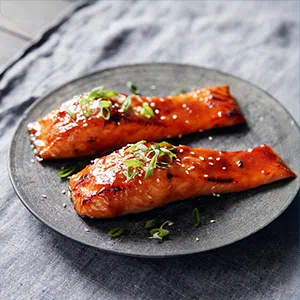
Transform your dinner routine with this glazed miso tofu recipe that elevates a few simple ingredients into a flavorful and nutritious weeknight meal.This recipe is created by Marc Matsumoto (No Recipes®)
Whether you’re a tofu lover or not, this miso tofu recipe transforms the humble plant-based protein into an easy weeknight meal that comes together in minutes. Inspired by a traditional Japanese dish called Tofu Dengaku, this modern take makes it easy to prepare in a home kitchen while ensuring your block of firm tofu reaches crave-worthy levels of flavor thanks to an umami-packed miso glaze. It’s a testament to how thoughtfully combined simple ingredients can create a comforting yet nutritious meal.
Why This Recipe Works
Draining the tofu on paper towels eliminates excess moisture, ensuring a crisp, browned crust.
Dusting the tofu with potato starch creates a nice crust that absorbs the glaze, helping it to stick.
Shallow frying the tofu allows you to get even browning, and then you can use paper towels to soak up the excess oil safely before adding the miso glaze.
Ingredients for Glazed Miso Tofu
Firm Tofu Block -It’s substantial enough for the tofu pieces to hold their shape through the cooking process, and they take on a meatier texture as the surface forms a golden brown crust. Extra-firm tofu will work for more protein, but it tends to be a bit more dense and dry. On the other hand, silken tofu has a higher water content, giving it a creamy texture that makes it harder to keep the slices from falling apart.
Aromatics -Dusting the tofu with dried aromatics like garlic powder or ginger is a great way to add more flavor to this protein. Grated fresh ginger or garlic cloves will work, but they can make the starch coating sticky and difficult to handle.
Potato Starch – This is the secret to creating the crispiest tofu, which the glaze will cling to. If you can’t find potato starch, other types of starch, such as cornstarch, will work.
Sake – Sake is a Japanese rice wine made by brewing rice with koji and yeast. The process creates amino acids which give food the taste of umami. In this recipe it acts a liquid to help dissolve the miso paste while adding a savory taste to the miso sauce. The alcohol burns off during the cooking process.
Miso – Red miso paste is the star ingredient for this glazed tofu. A longer aging period gives red miso a deeper and more robust flavor than white miso paste, contributing a nutty complexity that makes this dish stand out.
Sugar – Dark brown sugar adds an earthy molasses-like sweetness to the miso glaze while contrasting the savory miso. You can substitute granulated sugar, honey, maple syrup, or other sweeteners that are easy to dissolve.
Garnishes – Green onion adds a fresh, crisp bite to the dish while providing a beautiful visual contrast, but other chopped herbs like parsley, spring onions, or chives will work. Toasted sesame seeds are another nice garnish, adding a nutty flavor and slight crunch for another layer of texture and taste to this miso-glazed tofu.
How to Make Glazed Miso Tofu
Slice the block of tofu into 3/4-inch thick steaks and place them on a baking tray with several layers of paper towels to drain as much excess water as possible (about 30 minutes). Moisture will cause the tofu slices to steam instead of crisp, which is why it’s so important to drain them thoroughly first.
While you wait for that to drain, make the miso glaze in a small mixing bowl by whisking the sake, red miso paste, and dark brown sugar into a smooth sauce.
Pat the surface of the tofu dry with additional paper towels, and then season with garlic powder. Then, coat each piece in an even layer of potato starch by dipping each side into the starch and dusting off any excess. You may not need all of the starch.
Heat a generous amount of vegetable oil in a skillet over medium heat. Carefully lay the tofu in the pan in a single layer with space between each piece, allowing them to shallow fry undisturbed until they’ve formed a golden brown crust on one side. Flip them over to brown the second side. Now, you want to remove as much oil from the pan as possible using paper towels to soak it up. This keeps the pan-fried tofu from getting greasy and ensures the glaze will stick to the crisp coating.
Pour in the miso sauce and flip the bites of tofu repeatedly until no extra glaze remains in the pan. Garnish your miso-glazed tofu with chopped green onions and toasted sesame seeds, and serve.
How to Serve
For a balanced meal, serve this miso-glazed tofu on a bed of rice or as a topping for a salad or noodles. Brown rice and quinoa are great alternatives if you want a more nutrient-dense option, and if you’re watching your carbs, cauliflower rice will work as well. Along with some steamed veggies like broccolini, green beans, or edamame beans, miso tofu makes for a delicious, easy weeknight meal.
Slice 350 grams firm tofu into five pieces roughly the same thickness and then place them on a paper towel-lined rack over a baking sheet to drain for at least 30 minutes.
Whisk 1/4 cup sake, 2 tablespoons ORGANIC MISO RED, and 1 tablespoon dark brown sugar together until you have a smooth sauce.
When you’re ready to cook the tofu pieces, pat them dry on all sides with paper towels.
Preheat 2 tablespoons vegetable oil in a frying pan over medium heat.
Sprinkle the tofu evenly with the 1/8 teaspoon garlic powder and then dust with a thin, even layer of 3 tablespoons potato starch on all sides.
Pat off any excess starch from the tofu steaks and place them in the preheated oil. Fry undisturbed until they've started to brown around the edges. Flip them over and brown the second side.
When you've achieved the desired level of crispiness on both sides (about 2 minutes per side), use a paper towel to soak up as much of the oil from the pan as possible.
Add the miso sauce and flip the pan-fried tofu over repeatedly until each piece is coated in a thick, shiny layer of miso glaze and no extra glaze is left in the pan.
Serve the miso glazed tofu with rice and steamed veggies, and garnish with chopped 1 scallion and 1/2 teaspoon toasted sesame seeds.
Product used in this recipe
Organic Miso Red Miso 17.6 oz (500 g)
Our Organic Miso “Red Miso” is made from organic rice and soybeans, with bright red in color. The Long fermentation process creates a distinct, deep, and rich taste, with a strong miso aroma.
Marc Matsumoto is a Tokyo-based culinary creator and cookbook author who’s passionate about the benefits and versatility of Japanese ingredients. Through his website Norecipes.com, he shares delicious ways to use Japanese ingredients such as miso to elevate everyday meals.
This Tomato and Tofu Miso Soup combines both comfort and refreshing flavors with just a few ingredients. Here, we pair sweet cherry tomatoes and silky tofu with a kombu dashi broth and finish it with savory miso paste. This vegan-friendly miso soup is lovely alongside any Japanese breakfast, lunch, or dinner.This recipe is created by Nami( Just One Cookbook®)
1pieceKombu (dried kelp) (⅓ oz, 10 g; 4inches x 4 inches or 10 cm x 10 cm)
4cupsWater
For the Miso Soup
12Cherry tomatoes
7ozSoft/silken tofu (kinugoshi dofu) (half of a typical 14-oz package)
4tbspORGANIC MISO RED; typically, use 1 Tbsp miso for every 1 cup (240 ml) of dashi)
Instructions
To Make the Kombu Dashi
Add the water and kombu to a medium saucepan. If you have time, soak the kombu in water for 30 minutes. NEVER wash kombu and do not remove the white substance—that’s umami! These days, it's pretty clean so just make sure there are no dirt particles.
Set the heat to medium-low and bring it to a boil SLOWLY over about 10 minutes. This allows you to extract as much umami from the kombu as possible. Right before the stock boils, remove the kombu and set it aside for another use. (If you leave the kombu, it gets slimy and yields a bitter taste.) Now, your Kombu Dashi is ready to use! Reserve the spent kombu and repurpose it; see the suggested recipes that follow at the end of the instructions.
To Prepare the Miso Soup
Cut the tofu into ½-inch (1.3 cm) cubes. Add the tofu and cherry tomatoes to the pot with the kombu dashi. Bring it to a gentle simmer until the ingredients are heated through.
Once simmering, turn off the heat. Add the miso using a fine-mesh miso strainer, which helps you dissolve the miso faster. After dissolving it, you may see rice koji (especially when it's koji miso) left in the strainer. You can either add it to the soup or discard it (personal preference). If you don't have a miso strainer, put 2 Tbsp of miso in a ladle, slowly add the dashi into the ladle, and stir with chopsticks to dissolve the miso completely before adding more miso. Take care not to break the tofu as you stir.Tip: You must taste the soup to determine if you need to add more miso. If you accidentally add too much miso, dilute the soup with dashi or water.
Reheat the soup until it is just hot. NEVER BOIL miso soup because it loses nutrients, flavor, and aroma. Once it's hot, turn off the heat and serve immediately. Place on the right side of the table setting; you can read more about this in my Ichiju Sansai (One Soup Three Dishes) blog post.
To Store
In general, it's best to consume all the miso soup right away because it will lose its aroma and taste as time passes. Let your miso soup cool to room temperature (up to 4 hours; any longer and it will spoil) and then refrigerate. Keep for up to 2 days in the refrigerator. If you want to make a big batch to store for later, it's best to refrigerate the soup without adding the miso. When ready to use, add the miso only for the portion you need. You can freeze miso soup for up to 2 weeks. However, you have to remove the tofu before freezing as the texture will change. If you have any leftover Kombu Dashi, you can store it in the refrigerator for up to 3-5 days and in the freezer for up to 2 weeks.
To Reheat the Soup
Heat the miso soup in a pot over medium heat, but do not boil. Miso loses its nutrients, flavor, and aroma at high temperatures.
What To Do with the Spent Kombu?
Save the spent kombu in an airtight container and store it in the refrigerator for a week or in the freezer for up to a month. You can combine it with the spent katsuobushi to make HomemadeFurikake (Rice Seasoning). With the spent kombu, you can make Simmered Kombu (Kombu Tsukudani).
Product used in this recipe
Organic Miso Red Miso 17.6 oz (500 g)
Our Organic Miso “Red Miso” is made from organic rice and soybeans, with bright red in color. The Long fermentation process creates a distinct, deep, and rich taste, with a strong miso aroma.
Namiko Hirasawa Chen is the creator of Just One Cookbook, the #1 English-language website for Japanese recipes. Nami believes that anyone can cook traditional and modern Japanese dishes with confidence using her accessible, step-by-step instructions and videos. To help home cooks prepare and beautifully plate their homemade meals, she recently launched her online shop called JOC Goods dedicated to artisan Japanese tableware and kitchenware. Nami was born and raised in Yokohama, Japan and now resides with her family in California.
With an earthy, nutty flavor, and a wonderfully creamy texture, this Nameko Mushroom Miso Soup is a perfect way to welcome autumn!This recipe is created by Nami( Just One Cookbook®)
Add dashi in a pot and bring it to a simmeron medium-low heat.
Rinse the mushrooms thoroughly but quickly under running water, and discard the ends. Cut the tofu into small cubes.
Once dashi is boiling, add nameko mushrooms and cook for 2-3 minutes. Turn off the heat.
For the best result, add miso in the soup right before serving. Then add tofu and bring it to a simmer (not boiling).Turn off the heat and serve. Enjoy!
Product used in this recipe
Organic Miso Red Miso 17.6 oz (500 g)
Our Organic Miso “Red Miso” is made from organic rice and soybeans, with bright red in color. The Long fermentation process creates a distinct, deep, and rich taste, with a strong miso aroma.
Namiko Hirasawa Chen is the creator of Just One Cookbook, the #1 English-language website for Japanese recipes. Nami believes that anyone can cook traditional and modern Japanese dishes with confidence using her accessible, step-by-step instructions and videos. To help home cooks prepare and beautifully plate their homemade meals, she recently launched her online shop called JOC Goods dedicated to artisan Japanese tableware and kitchenware. Nami was born and raised in Yokohama, Japan and now resides with her family in California.
Tofu and Wakame Seawood Miso Soup is a Japanese all-star recipe.The standard combination: miso soup with tofu and wakame seaweed garnished with chopped green onions. Miso and some well selected ingredients complete the uncomplicated taste of this classic miso soup.
3cups (720 ml)dashi soup stock(for our purposes 1 cup is equal to 240 ml)
3tbspHikari Miso's miso
½packagesoft tofu (approx. 5 oz or 150 g)
1tspdried wakame seaweed(sold at most Asian markets and natural foods stores)
½cup or morechopped leeks or green onions
Instructions
Pour dashi soup stock into a pot and place it over high heat.
Once dashi stock comes to a boil, turn heat down to low and stir in and dissolve the miso.
Cut tofu into 2 cm/3/4-in. cubes and cut wakame seaweed into about 2 cm/ ¾-in. square; then put them into the soup. You can avoid crumbling the tofu by sliding it into the pot directly from the cutting board.
Turn off the heat once the tofu starts to move but before they start to float.
Serve in a soup bowl. Top with chopped onions.
Product used in this recipe
Enjuku Koji Miso 26.4 oz (750 g)
Our Enjuku Kouji Miso has been our best-selling miso in Japan for over 30 years. The Miso has a bright beige in color, and has a perfect balance of umami and sweetness. Powerful flavor with a long and complex finish gives very versatile cooking use for many miso soup recipes.
Our Organic Miso “White Miso” is the traditional Shinshu-style miso made from organic rice and soybeans, with bright beige in color, and an excellent balance of refreshing aroma and umami. It is the most versatile among Hikari Miso Organic Miso series to match with any cooking.
14 oz.(400g) tub extra firm tofucut into 1/2-in.rectangle-shaped slices
1/2cuptamari or soy sauce
2TbspORGANIC MISO WHITE
2Tbspfresh lemon juice
2ea.garlic clovesminced
1Tbspfresh gingerminced
1tspred pepper flakesoptional
1tspsesame seedsfor garnish
1/4cupgreen onionschopped, for garnish
Optional Miso Sauce forDrizzling on Baked Tofu Cutlets
3 oz.(85g) Organic Miso Red
1 oz.(30g) small garlic cloveminced
1/2cupextra virgin olive oil or grape seed oil
1/4 cup + 2 Tbsprice vinegar
1tspwhite or regular balsamic vinegar
Instructions
Place tofu pieces into a casserole baking dish.
Combine tamari or soy sauce, white miso, lemon juice, garlic, ginger, and red pepper flakes.
Pour marinade over tofu pieces.
Bake in 350 degree oven for 30to 35 minutes.
Sprinkle with sesame seeds and/or chopped green onions.
【Miso Sauce】
Simply combine the following and set aside until tofu cutlets are completely baked.
Product used in this recipe
Organic Miso White Miso 17.6 oz (500 g)
Our Organic Miso “White Miso” is the traditional Shinshu-style miso made from organic rice and soybeans, with bright beige in color, and an excellent balance of refreshing aroma and umami. It is the most versatile among Hikari Miso Organic Miso series to match with any cooking.
1block – 12 oz. (340g)silken soft tofudrained as needed
3 1⁄2 oz.mascarpone cheese
1 1⁄2oz.ORGANIC MISO WHITE
To tastechiveschopped
Instructions
Heat mascarpone and miso over a double boiler until melted and flowing.
Place tofu on an oven-proof dish and surround with plenty of mascarpone-miso sauce.
Broil tofu until golden.
Sprinkle with chopped chives.
Product used in this recipe
Organic Miso White Miso 17.6 oz (500 g)
Our Organic Miso “White Miso” is the traditional Shinshu-style miso made from organic rice and soybeans, with bright beige in color, and an excellent balance of refreshing aroma and umami. It is the most versatile among Hikari Miso Organic Miso series to match with any cooking.
This website uses cookies to enhance user experience and to analyze performance and traffic on our website.
By clicking “Accept Cookies”, you consent to our use of cookies while you use this website.
For more information on how we process your data, please see our Privacy Policy