

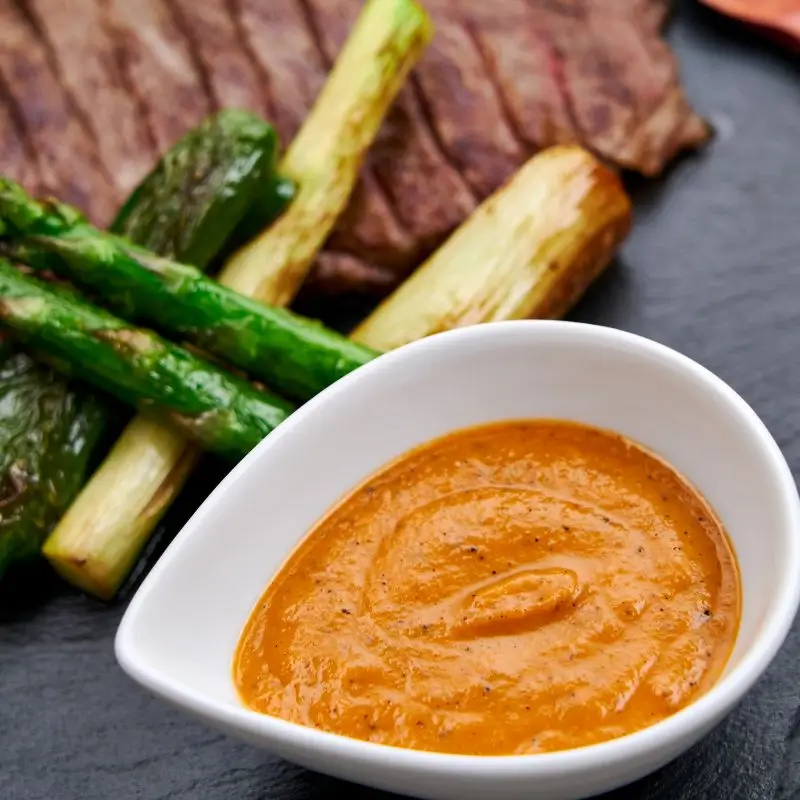
If you’ve ever had yakiniku sauce or gomadare at a Japanese restaurant, you know how that savory, sweet, and tangy combination makes grilled meat taste better without competing with it. This sauce lives in that same family, but it uses white miso as the backbone instead of soy sauce or sesame.
What makes it work is the body. Pureed apple and grated onion thicken the sauce naturally, so it coats and clings to a slice of steak the way a good sauce should. No cream, no butter, no starch-heavy slurry that can make some sauces too heavy.
The whole thing comes together in one pot in about 15 minutes, and the flavor gets better after a day or two in the fridge so it’s a great make-ahead condiment that makes just about anything taste better.
Why This Recipe Works
- Pureeing builds body naturally — Blending apple, onion, and miso together creates a thick, stable sauce where the fruit pectin and plant fiber do the heavy lifting. A small amount of potato starch helps keep everything emulsified, but the body comes from the puree itself, so it stays smooth and spoonable straight from the fridge instead of turning gummy the way heavily starch-thickened sauces do.
- A short simmer does a lot of work — The 10-minute cook isn’t just about thickening. It burns off the raw alcohol from the sake, mellows the sharp bite of raw onion, and lets the sugars in the apple and miso start to caramelize slightly. The sauce that comes off the stove tastes noticeably more complex and mellow than what went in.
- Three types of fermented flavor in one sauce — Miso, sake, and Worcestershire sauce are all fermented, but they each bring different compounds to the table. Stacking them creates a savory depth that a single source of umami can’t achieve on its own.
Key Ingredients
- Organic White Miso — The foundation of the whole sauce. White miso is milder and sweeter than red miso, which lets it add umami without making the sauce taste like miso soup. It also contributes salt and body.
- Sake — Sake adds a clean, slightly sweet fermented flavor and helps dissolve the miso into a smooth sauce. As it simmers, the alcohol cooks off and leaves behind a subtle depth that rounds out the other ingredients.
- Apple — Grated apple does double duty here. It thickens the sauce as it breaks down, and it adds a fruity sweetness that balances the salt from the miso and the heat from the ginger and pepper. Use any sweet, crisp apple like Fuji or Gala.
- Ginger — Fresh grated ginger brings a sharp, clean heat that’s different from the slow burn of black pepper. It also adds a brightness that keeps the sauce from tasting flat.
- Worcestershire sauce — This might seem out of place in a Japanese sauce, but Worcestershire is actually a pantry staple in Japan. It adds a layer of tangy, fermented complexity that ties the miso and sake together.
- Potato starch — Just a small amount to give the sauce a slight glossy sheen and help it emulsify. It’s barely noticeable, but it makes the finished sauce look and feel more polished. Any kind of starch such as cornstarch or arrowroot starch will work.
How to Make Japanese Steak Sauce
Blend the Sauce Base
Add all of the sauce ingredients to a pot and use a stick blender to puree everything until smooth. You want the apple and onion completely broken down so there are no chunks. A food processor or countertop blender works too if you don’t have an immersion blender, just transfer the mixture back to the pot after blending.
Simmer Until Thick
Bring the sauce to a full boil, then drop the heat to a gentle simmer. Stir it regularly as it cooks. You’re waiting for two things: the raw onion smell to cook off, and the sauce to thicken enough to coat the back of a spoon. This takes about 10 minutes. If it reduces too much and starts to get pasty, add a splash of water to loosen it back up.
TIP: The sauce will continue to thicken as it cools, so pull it off the heat when it’s slightly thinner than your target consistency.
Serve or Store
Spoon the sauce alongside a pan-seared or grilled steak, or wait till it cools and transfer it to a squeeze bottle or jar and store it in the fridge for up to a month.
Serve This With
This sauce pairs with just about any protein you can grill, pan-sear, or roast. It’s a natural match for wagyu or any well-marbled steak, but it’s just as good spooned over sliced brisket, roast beef, or grilled chicken thighs. For something lighter, try it alongside grilled tofu or as a dipping sauce for roasted vegetables.
Here are some other recipes you can work this sauce into. Try it in place of the glaze on miso glazed chicken thighs for a tangier, more complex finish. It also works as a dipping sauce alongside miso-marinated steak or drizzled over miso marinated beef and vegetable skewers instead of their usual glaze. For a vegetarian option, swap it in on glazed miso tofu. Round out the plate with a simple green salad dressed with miso vinaigrette.
Ingredients
- 1/4 cup Organic White Miso
- 1/4 cup sake
- 1/4 cup water
- 1/4 cup apple,grated
- 1 tablespoon onion,grated
- 1 tablespoon honey
- 1 tablespoon ketchup
- 2 tablespoon Worcestershire sauce
- 1 tablespoon ginger,grated
- 1 tablespoon black pepper
- 1 tablespoon toasted sesame oil
- 1/4 teaspoon potato starch
Nutrition Facts
Instructions
- Add 1/4 cup Organic White Miso, 1/4 cup sake, 1/4 cup water, 1/4 cup apple,grated, 1 tablespoon onion,grated, 1 tablespoon honey, 1 tablespoon ketchup, 2 tablespoon Worcestershire sauce, 1 tablespoon ginger,grated, 1 tablespoon black pepper, 1 tablespoon toasted sesame oil, and 1/4 teaspoon potato starch to a pot. Use a stick blender to puree the mixture until smooth. You can also do this in a food processor or blender.

- Bring the miso steak sauce to a full boil, then reduce the heat to maintain a gentle simmer. Cook the sauce,stirring regularly, until it no longer smells like raw onion and has thickened,about 10 minutes. If it gets too thick, you can add some more water.
- Pan-fry or grill your favorite cut of wagyu steak and serve it with the Japanese steak sauce.


