Flavourful All-In-One Dish The miso which offers aging and richness goes well with umami from pork ribs. Chunky vegetable pieces paired with pork make this a deliciously filling soup.
Wash the potato and carrot and chop them into large pieces without removing the skin. Cut onion into quarter wedges with its core intact. Separate broccoli into florets. Remove the stem from the tomatoes.
Heat olive oil in a pot over medium heat and add pork ribs, spreading it out. Cook until the pork changes its color. Add water, potato, carrot, onion, and 1/2 of miso, and bring to a boil. Lower the heat and simmer for 10 minutes. Add broccoli and simmer for another 5 minutes.Tips: Adding miso in two separate stages is the key. The first stage is to infuse the miso flavor into vegetables thoroughly and the second stage is to enhance the flavor.
Product used in this recipe
Kodawattemasu Organic Miso 17.6 oz (500 g)
Our Kodawattemasu Organic Miso, the best-selling organic miso in Japan for years, is made with organic rice and soy beans, with bright red in color. Long fermentation process creates it distinct, deep, and rich taste, with strong miso aroma.
Hearty and flavorful, this Kabocha (Squash) Miso Soup is filled with sweet kabocha, umami-rich mushrooms, and nutty sesame seeds. It'splant-based, easy to make, and incredibly delicious!This recipe is created by Nami( Just One Cookbook®)
In an ungreased frying pan, toast the sesame seeds on medium heat until toasty and fragrant. Shake the pan frequently so the sesame seeds don’t get burnt. Transfer to the Japanese mortar and pestle(suribachi and surikogi). Grind the sesame seeds until most of them are crushed.
Discard the seeds from the kabocha and cut into ½-inch thick slices. Be careful as kabocha is quite tough to cut. Cut the slices into small chunks, roughly 1-inch pieces. Transfer the kabocha into a medium pot.
Add 4 cups water and bring the water to boil over medium heat. Cover the lid leaving a small gap to prevent from boiling over.
Once boiling, skim the foam and scum on the surface using a fine-mesh skimmer. Cook kabocha for 15 minutes, or until tender. Do not overcook as kabocha will break into pieces. You can check the kabocha’s doneness by inserting a wooden skewer into the kabocha. Check frequently to prevent it from overcooking.
When kabocha is ready, remove the bottom of Shimeji mushrooms and add to the soup. Cook for 1-2 minutes until tender.
Turn off the heat and add 3 tbsp miso first. Taste before adding one more 1 tbsp miso. You may not need to add more miso or add more if necessary. Add the ground sesame seeds and mix well. Serve the miso soup in individual bowls and enjoy!
Namiko Hirasawa Chen is the creator of Just One Cookbook, the #1 English-language website for Japanese recipes. Nami believes that anyone can cook traditional and modern Japanese dishes with confidence using her accessible, step-by-step instructions and videos. To help home cooks prepare and beautifully plate their homemade meals, she recently launched her online shop called JOC Goods dedicated to artisan Japanese tableware and kitchenware. Nami was born and raised in Yokohama, Japan and now resides with her family in California.
This Tomato and Tofu Miso Soup combines both comfort and refreshing flavors with just a few ingredients. Here, we pair sweet cherry tomatoes and silky tofu with a kombu dashi broth and finish it with savory miso paste. This vegan-friendly miso soup is lovely alongside any Japanese breakfast, lunch, or dinner.This recipe is created by Nami( Just One Cookbook®)
1pieceKombu (dried kelp) (⅓ oz, 10 g; 4inches x 4 inches or 10 cm x 10 cm)
4cupsWater
For the Miso Soup
12Cherry tomatoes
7ozSoft/silken tofu (kinugoshi dofu) (half of a typical 14-oz package)
4tbspORGANIC MISO RED; typically, use 1 Tbsp miso for every 1 cup (240 ml) of dashi)
Instructions
To Make the Kombu Dashi
Add the water and kombu to a medium saucepan. If you have time, soak the kombu in water for 30 minutes. NEVER wash kombu and do not remove the white substance—that’s umami! These days, it's pretty clean so just make sure there are no dirt particles.
Set the heat to medium-low and bring it to a boil SLOWLY over about 10 minutes. This allows you to extract as much umami from the kombu as possible. Right before the stock boils, remove the kombu and set it aside for another use. (If you leave the kombu, it gets slimy and yields a bitter taste.) Now, your Kombu Dashi is ready to use! Reserve the spent kombu and repurpose it; see the suggested recipes that follow at the end of the instructions.
To Prepare the Miso Soup
Cut the tofu into ½-inch (1.3 cm) cubes. Add the tofu and cherry tomatoes to the pot with the kombu dashi. Bring it to a gentle simmer until the ingredients are heated through.
Once simmering, turn off the heat. Add the miso using a fine-mesh miso strainer, which helps you dissolve the miso faster. After dissolving it, you may see rice koji (especially when it's koji miso) left in the strainer. You can either add it to the soup or discard it (personal preference). If you don't have a miso strainer, put 2 Tbsp of miso in a ladle, slowly add the dashi into the ladle, and stir with chopsticks to dissolve the miso completely before adding more miso. Take care not to break the tofu as you stir.Tip: You must taste the soup to determine if you need to add more miso. If you accidentally add too much miso, dilute the soup with dashi or water.
Reheat the soup until it is just hot. NEVER BOIL miso soup because it loses nutrients, flavor, and aroma. Once it's hot, turn off the heat and serve immediately. Place on the right side of the table setting; you can read more about this in my Ichiju Sansai (One Soup Three Dishes) blog post.
To Store
In general, it's best to consume all the miso soup right away because it will lose its aroma and taste as time passes. Let your miso soup cool to room temperature (up to 4 hours; any longer and it will spoil) and then refrigerate. Keep for up to 2 days in the refrigerator. If you want to make a big batch to store for later, it's best to refrigerate the soup without adding the miso. When ready to use, add the miso only for the portion you need. You can freeze miso soup for up to 2 weeks. However, you have to remove the tofu before freezing as the texture will change. If you have any leftover Kombu Dashi, you can store it in the refrigerator for up to 3-5 days and in the freezer for up to 2 weeks.
To Reheat the Soup
Heat the miso soup in a pot over medium heat, but do not boil. Miso loses its nutrients, flavor, and aroma at high temperatures.
What To Do with the Spent Kombu?
Save the spent kombu in an airtight container and store it in the refrigerator for a week or in the freezer for up to a month. You can combine it with the spent katsuobushi to make HomemadeFurikake (Rice Seasoning). With the spent kombu, you can make Simmered Kombu (Kombu Tsukudani).
Product used in this recipe
Organic Miso Red Miso 17.6 oz (500 g)
Our Organic Miso “Red Miso” is made from organic rice and soybeans, with bright red in color. The Long fermentation process creates a distinct, deep, and rich taste, with a strong miso aroma.
Namiko Hirasawa Chen is the creator of Just One Cookbook, the #1 English-language website for Japanese recipes. Nami believes that anyone can cook traditional and modern Japanese dishes with confidence using her accessible, step-by-step instructions and videos. To help home cooks prepare and beautifully plate their homemade meals, she recently launched her online shop called JOC Goods dedicated to artisan Japanese tableware and kitchenware. Nami was born and raised in Yokohama, Japan and now resides with her family in California.
Tonjiru (sometimes called Butajiru) is a hearty pork and vegetable miso soup. With just 1 min in the Instant Pot, it will be the ultimate, comfy soup for the fall and winter months!This recipe is created by Nami( Just One Cookbook®)
1/2lb (227g)Pork belly slices (Tip: If you freeze the meat for ½ hour or so ahead of time, it is much easier to cut)
6cups (1500ml)Dashi
1tbspOil
2Green onions/scallions
8tbspORGANIC MISO WHITE
Instructions
Cut the potatoes and daikon into ¼ inch thick slabs and then cut into sticks. Soak the potatoes in water to remove the starch, for about 15 minutes.
Cut the onion into thin slices. Cut the carrot in half lengthwise, then cut into ¼ inch thick slices.
Scrape the gobo skin with the back of the knife. Cut the gobo in half lengthwise and then thinly slice gobo diagonally. Soak in water for 15 minutes to get rid of bitter taste. Tip 1: Gobo has delicious earthy taste right below the skin; therefore, you do not use a peeler to peel off the soft skin. Tip 2: Add a dollop of vinegar to make the gobo white (optional).
Cut the konnyaku into ¼ inch thick slabs, then cut into sticks. Blanch the konnyaku in a boiling water for 3 minutes to remove the smell. Drain konnyaku into a sieve.
Cut the pork belly slices into 1 inch thick pieces. Tip: If you freeze the meat for ½ hour or so ahead of time, it is much easier to cut.
Press the “Saute” button on your Instant Pot and heat 1 Tbsp cooking oil. When the oil is hot, add the onion and coat with the oil. Then add the meat and stir to combine.
Add all the vegetables and konnyaku and stir to combine.
Add the dashi. Dashi should cover the ingredients. The vegetables will release moisture so don’t worry if you feel the soup is not enough at this stage. If dashi is not covering the ingredients, add more dashi (or water).
Press “Cancel” to stop the “Saute” menu. Close the lid and press the “Manual” or “Pressure Cook”menu. Then set high pressure for 1 minute. Make sure the steam release handle points at “sealing” and not “venting”. The float valve goes up when pressurized.
While the miso soup is being cooked, youcan cut the green onions and set aside.
When it’s finished cooking, the Instant Pot will switch automatically to the “Keep Warm” mode. Let the pressure release naturally for 30 minutes. If the valve hasn’t dropped yet, then quick release the air (be careful and cover your fingers with a mitten or kitchen towel).
Open the lid and check if the hardvegetables are tender. Add 8 tbsp of Organic Miso White. Dissolve the miso in a ladle before releasing to the soup. Make sure to taste the miso soup. If you added too much miso, add dashi (or water) to dilute. If it’s not enough, add more miso ½ tbsp at a time.
Pour the Tonjiru in a big bowl and sprinkle some green onions. Serve immediately.
Product used in this recipe
Organic Miso White Miso 17.6 oz (500 g)
Our Organic Miso “White Miso” is the traditional Shinshu-style miso made from organic rice and soybeans, with bright beige in color, and an excellent balance of refreshing aroma and umami. It is the most versatile among Hikari Miso Organic Miso series to match with any cooking.
Namiko Hirasawa Chen is the creator of Just One Cookbook, the #1 English-language website for Japanese recipes. Nami believes that anyone can cook traditional and modern Japanese dishes with confidence using her accessible, step-by-step instructions and videos. To help home cooks prepare and beautifully plate their homemade meals, she recently launched her online shop called JOC Goods dedicated to artisan Japanese tableware and kitchenware. Nami was born and raised in Yokohama, Japan and now resides with her family in California.
With an earthy, nutty flavor, and a wonderfully creamy texture, this Nameko Mushroom Miso Soup is a perfect way to welcome autumn!This recipe is created by Nami( Just One Cookbook®)
Add dashi in a pot and bring it to a simmeron medium-low heat.
Rinse the mushrooms thoroughly but quickly under running water, and discard the ends. Cut the tofu into small cubes.
Once dashi is boiling, add nameko mushrooms and cook for 2-3 minutes. Turn off the heat.
For the best result, add miso in the soup right before serving. Then add tofu and bring it to a simmer (not boiling).Turn off the heat and serve. Enjoy!
Product used in this recipe
Organic Miso Red Miso 17.6 oz (500 g)
Our Organic Miso “Red Miso” is made from organic rice and soybeans, with bright red in color. The Long fermentation process creates a distinct, deep, and rich taste, with a strong miso aroma.
Namiko Hirasawa Chen is the creator of Just One Cookbook, the #1 English-language website for Japanese recipes. Nami believes that anyone can cook traditional and modern Japanese dishes with confidence using her accessible, step-by-step instructions and videos. To help home cooks prepare and beautifully plate their homemade meals, she recently launched her online shop called JOC Goods dedicated to artisan Japanese tableware and kitchenware. Nami was born and raised in Yokohama, Japan and now resides with her family in California.
Miso Soup with Mozzarella Cheese and Grilled Zucchini
No ratings yet
Adding mozzarella cheese on top of the soup gives this recipe an extra kick of creamy sweetness and umami flavor.Tip: You can replace mozzarella cheese with grated cheese, sliced cheese or camembert cheese.
Cut zucchini into rings approx. 0.6 inch (1.5cm) thick. Cut Mozzarella cheese into cubes approx. 0.6 inch (1.5 cm) thick.
Heat olive oil in a small pot and grill the zucchini on middle heat until golden-brown on both sides.
Add water in the pot. Remove the pot from heat after boiling. Add miso and stir it to be completely dissolved. Reheat the miso soup until it is just hot. Never boil the soup.
Add Mozzarella cheese and serve the soup in a bowl immediately because the cheese sticks to the bottom of the pot with time.
Product used in this recipe
Organic Miso Red Miso 17.6 oz (500 g)
Our Organic Miso “Red Miso” is made from organic rice and soybeans, with bright red in color. The Long fermentation process creates a distinct, deep, and rich taste, with a strong miso aroma.
Boasting only five ingredients, this dish offers the refreshing taste of miso soup combined with basil and cherry tomatoes, with rich umami also coming from the cherry tomatoes. For full flavor, sprinkle olive oil on this quick and easy dish to finish.
Remove cherry tomato stems and cut tomatoes in half.
Boil the dashi broth in a pot, turn off the heat, and dissolve the miso in it. Add cherry tomatoes, heat again and turn off heat when it returns to a boil.
Serve in a bowl, tear some basil and place on the soup, sprinkle with olive oil.
Product used in this recipe
Organic Miso White Miso 17.6 oz (500 g)
Our Organic Miso “White Miso” is the traditional Shinshu-style miso made from organic rice and soybeans, with bright beige in color, and an excellent balance of refreshing aroma and umami. It is the most versatile among Hikari Miso Organic Miso series to match with any cooking.
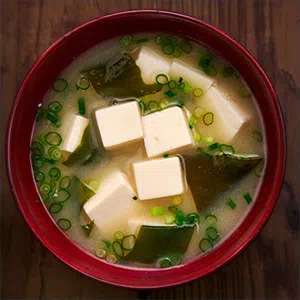
Tofu and Wakame Seawood Miso Soup is a Japanese all-star recipe.The standard combination: miso soup with tofu and wakame seaweed garnished with chopped green onions. Miso and some well selected ingredients complete the uncomplicated taste of this classic miso soup.
3cups (720 ml)dashi soup stock(for our purposes 1 cup is equal to 240 ml)
3tbspHikari Miso's miso
½packagesoft tofu (approx. 5 oz or 150 g)
1tspdried wakame seaweed(sold at most Asian markets and natural foods stores)
½cup or morechopped leeks or green onions
Instructions
Pour dashi soup stock into a pot and place it over high heat.
Once dashi stock comes to a boil, turn heat down to low and stir in and dissolve the miso.
Cut tofu into 2 cm/3/4-in. cubes and cut wakame seaweed into about 2 cm/ ¾-in. square; then put them into the soup. You can avoid crumbling the tofu by sliding it into the pot directly from the cutting board.
Turn off the heat once the tofu starts to move but before they start to float.
Serve in a soup bowl. Top with chopped onions.
Product used in this recipe
Enjuku Koji Miso 26.4 oz (750 g)
Our Enjuku Kouji Miso has been our best-selling miso in Japan for over 30 years. The Miso has a bright beige in color, and has a perfect balance of umami and sweetness. Powerful flavor with a long and complex finish gives very versatile cooking use for many miso soup recipes.
Our Organic Miso “White Miso” is the traditional Shinshu-style miso made from organic rice and soybeans, with bright beige in color, and an excellent balance of refreshing aroma and umami. It is the most versatile among Hikari Miso Organic Miso series to match with any cooking.
Take your favorite vegetables, add miso, and you’ve got a flavorful soup. It’s that simple! The vegetables are packed with umami, so you don’t need any dashi or broth. It’s a great way to enjoy seasonal vegetables and is a great option for vegetarians.
4cupswater(for our purposes 1 cup is equal to 240 ml)
4tbsp.ENJUKU KOJI MISO
1onion
5-6mushrooms of your choice(cleaned)
2potatoes(peeled and cut into eighths)
1-2carrots(peeled)
To tastechopped leeks or green onions or experiment with your favorite vegetables
Instructions
Cut vegetables into a bite-size, no larger than 3/-4-in.
In a soup stock pot in heated oil sauté’ onions until they become translucent; then add the other vegetables and sauté’ 3 more minutes.
Add water and boil until all the vegetables are soft; reduce heat to simmer and add miso paste.
Bring to a simmer and garnish with chopped leeks or sliced green onions.
Product used in this recipe
Enjuku Koji Miso 26.4 oz (750 g)
Our Enjuku Kouji Miso has been our best-selling miso in Japan for over 30 years. The Miso has a bright beige in color, and has a perfect balance of umami and sweetness. Powerful flavor with a long and complex finish gives very versatile cooking use for many miso soup recipes.
This Mushroom & Taro Miso soup matches well the texture of mushrooms, with taro root, which absorbs the flavor of miso in this autumnal favorite. Try this combination in the fall when the ingredients are in season. If finding or preparing taro root is difficult, potatoes will work just as well.
4fresh shiitake mushrooms or mushrooms of your choice cut into bite size pieces
4taro roots satoimo halved or small potatoes
3oz. (90g)chicken thigh meat
7tbsp.miso
3cups (720ml)dashi soup stock (or broth) *
Chives or other seasonal aromatic garnish
Instructions
Peel the taro roots and cut them in half. Cut away the hard bottoms of the shimeji and mushrooms of your choice, and separate or slice them into bite-sized pieces. Cut the chicken into pieces about the same size as the mushrooms
Place the taro roots, chicken and dashi into a pot and bring to a boil. Once the water begins to boil, skim the surface to remove any impurities. Continue cooking until the taro roots are soft.
Add the mushrooms and quickly boil
Dissolve the miso into the pot and turn off the heat just before the soup comes back to a boil. Ladle the soup into a bowl and sprinkle with minced chives.
Rate This Recipe
This website uses cookies to enhance user experience and to analyze performance and traffic on our website.
By clicking “Accept Cookies”, you consent to our use of cookies while you use this website.
For more information on how we process your data, please see our Privacy Policy