

- HOME
- What Is Miso
-
Is Miso Good for You? A Guide to Miso Health Benefits
Is Miso Good for You? A Guide to Miso Health Benefits
Updated May 25, 2026

Long before “superfood” became a buzzword, miso had already secured its place in Japanese cuisine—not just as a seasoning, but as a daily source of nourishment. Made by fermenting soybeans with salt and koji (a culture grown on grains like rice or barley), this flavorful, nutrient-dense fermented food has been a cornerstone of the traditional Japanese diet for over a thousand years.
In ancient Japan, samurai carried miso into battle for strength and stamina, while Buddhist monks relied on it as part of their plant-based diets. Modern science is beginning to validate what Japanese cooks have long known: that miso supports gut health, promotes heart health, and may even help reduce cancer risk. Here’s a look at miso’s wide range of potential health benefits.
Nutritional Profile of Miso Paste

Miso may be used in small amounts, but it packs a powerful nutritional content thanks to its soybean base and the fermentation process used to make it. Here are some of its key nutritional properties:
- Protein: Miso is a complete plant-based protein, providing all essential amino acids—about 2 grams of protein per tablespoon.
- Vitamin K: Essential for blood clotting and bone health, vitamin K is abundant in miso, with one tablespoon offering about 5% of Adequate Intake.
- Zinc: Known for supporting immune health and cellular repair, a tablespoon of miso contains roughly 5% of the RDA (Recommended Daily Allowance) of zinc.
- Manganese: Miso is rich in manganese, a trace mineral important for metabolism and antioxidant function. One tablespoon provides 8% of the RDA of manganese.
- Isoflavones: These soy-derived phytonutrients have antioxidant and estrogen-like properties and may support heart and bone health.
- B Vitamins: Fermentation enhances B vitamin levels in miso, especially B12.
Thanks to fermentation, miso’s nutrients become more bioavailable, meaning your body can absorb and use them more efficiently than unfermented soybeans.
Gut Health and Digestion

One of miso’s best-known health benefits is its positive effect on digestion. That’s because unpasteurized miso is a living food teeming with beneficial probiotics, bioactive compounds, and fermentation-derived enzymes.
- Improves gut microbiome balance: Miso is a functional food with beneficial bacteria and yeasts acting as probiotics. These friendly microbes can help populate your digestive tract with “good” bacteria and even fight off harmful bacteria, resulting in a healthier gut flora balance and improved digestion overall. To preserve these beneficial microbes, avoid boiling miso. Add it to soups and sauces at the end of cooking once the heat is off.
- Aids digestion with natural enzymes: Digestive enzymes such as protease and amylase are produced during the fermentation process of miso. These enzymes assist digestion by splitting complex proteins and carbohydrates into smaller, more absorbable molecules, making it easier to digest meals and absorb nutrients.
- Provides gut-friendly fiber: Because miso is made from soybeans (and sometimes grains), it contains dietary fiber that can benefit digestion.
- May ease IBS symptoms: In a 2024 animal study, a probiotic yeast from miso prevented stress-induced gut issues, hinting that miso could help with conditions like irritable bowel syndrome.
- May reduce inflammation: Miso may help calm inflammation in the digestive tract. In a 2021 animal study, scientists isolated probiotic strains from miso that increase anti-inflammatory signals in the gut, significantly reducing colon inflammation in animal models of colitis.
Heart Health
Despite its sodium content, miso may support cardiovascular health while reducing the risk of heart disease. That might sound surprising, but miso is more than just salt—it’s a complex matrix of peptides, antioxidants, and fermentation byproducts that appear to counteract some of sodium’s typical effects.
A 2017 study published by the Japanese Society of Internal Medicine found that the regular intake of miso soup decreased heart rate and had no negative impact on hypertension(blood pressure). Moreover, according to the American Heart Association, soy protein in miso reduces LDL cholesterol, improving overall lipid profiles.
Immune Support and Anti-Inflammatory Effects
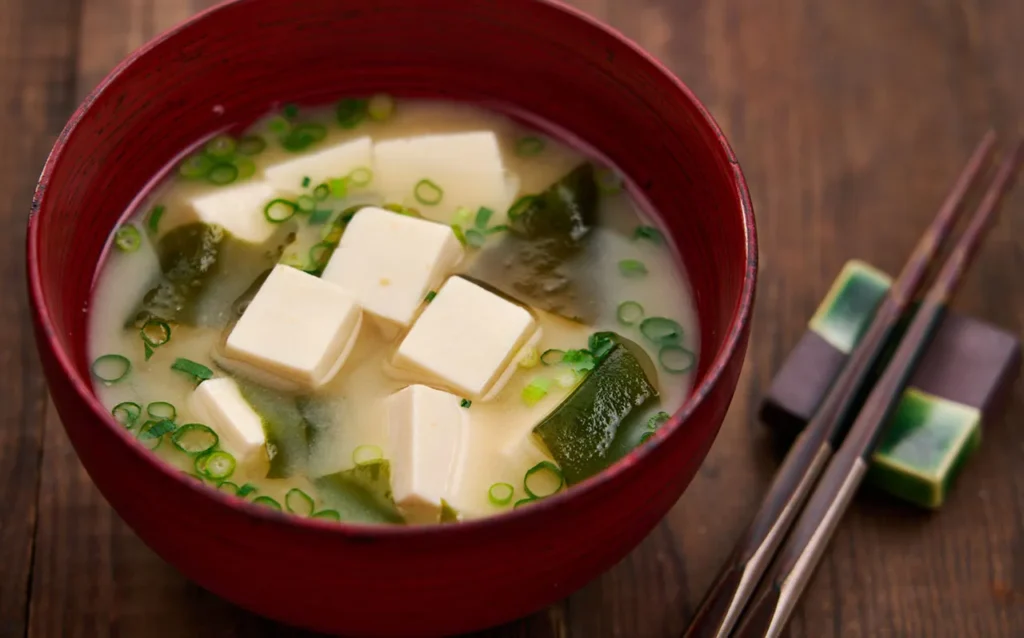
Just as chicken soup is a go-to comfort food in the West, hot miso soup has long been a traditional remedy in Japan. Its warm, umami-rich broth not only soothes but may also help you recover faster, thanks to its probiotics and immune-supporting nutrients.
Miso’s immune-system-boosting benefits come primarily from its probiotics and bioactive compounds. A healthy gut microbiome is essential for regulating the immune system, and fermented foods like miso help maintain that delicate balance.
Beyond probiotics, miso provides key immune-supporting minerals like zinc, copper, and selenium. It’s also rich in isoflavones—soy-based antioxidants that may help reduce inflammation and support immune resilience.
May Lower the Risk of Cancer
Miso may also help protect against certain types of cancer as part of its many potential health benefits. Several large studies in Japan have found that people who regularly consume miso, especially miso soup, tend to have lower cancer rates. For example, one study showed that habitual miso soup intake amongst women significantly reduced the risk of developing breast cancer compared to those who rarely ate it.
Some studies have noted that traditional fermented soy foods like miso are associated with lower rates of colon cancer in Asian populations. One hypothesis is that long fermentation produces special substances in miso that slow down cell growth in the colon, making it harder for tumors to form.
While miso is high in sodium, moderate consumption does not appear to raise stomach cancer risk—and may even offer protection when part of a balanced diet. In lab studies, rodents fed long-fermented miso had a lower incidence of gastric tumors.
Though more research is needed, miso’s combination of fermented nutrients, soy isoflavones, and beneficial bacteria shows promise in reducing the risk of certain cancers.
Is Miso Safe?
Miso is generally considered safe for healthy adults and can be a flavorful way to support overall wellness. As a fermented food, it offers probiotics and bioactive compounds linked to gut and immune health.
While miso is high in sodium, studies suggest the miso may not raise blood pressure as sharply as regular table salt—likely due to compounds formed during fermentation. Research has found no link between frequent miso soup consumption and hypertension. Miso can be part of a healthy, balanced diet when enjoyed in moderation.
That said, some people should take extra care. If you have high blood pressure, limiting sodium overall is wise, even if miso may be less impactful than other salty foods. People with thyroid conditions don’t need to avoid miso entirely, but soy can interfere with how the body absorbs thyroid medication. If you’re taking thyroid hormones, consult your doctor for guidance.
Miso is generally safe for pregnant and breastfeeding women when eaten in moderation. Consuming soy isoflavones during pregnancy has even been linked to positive behavioral outcomes among Japanese children.
If you have a soy allergy, you’ll want to avoid traditional miso, but chickpea miso is a great alternative. It offers a similar umami-rich flavor without soy and works well in most miso-based recipes.
How to Incorporate Miso Into a Healthy Diet
Miso is an easy, delicious way to upgrade your everyday cooking while boosting your digestive health. Its deep umami flavor makes almost any dish more satisfying, so consider it your new go-to seasoning. Swap it in for salt to season broths, whisk it into dressings, glaze vegetables or fish, or stir it into a savory marinade.Check out our guide on How to Use Miso Paste for more inspiration and recipes.


